
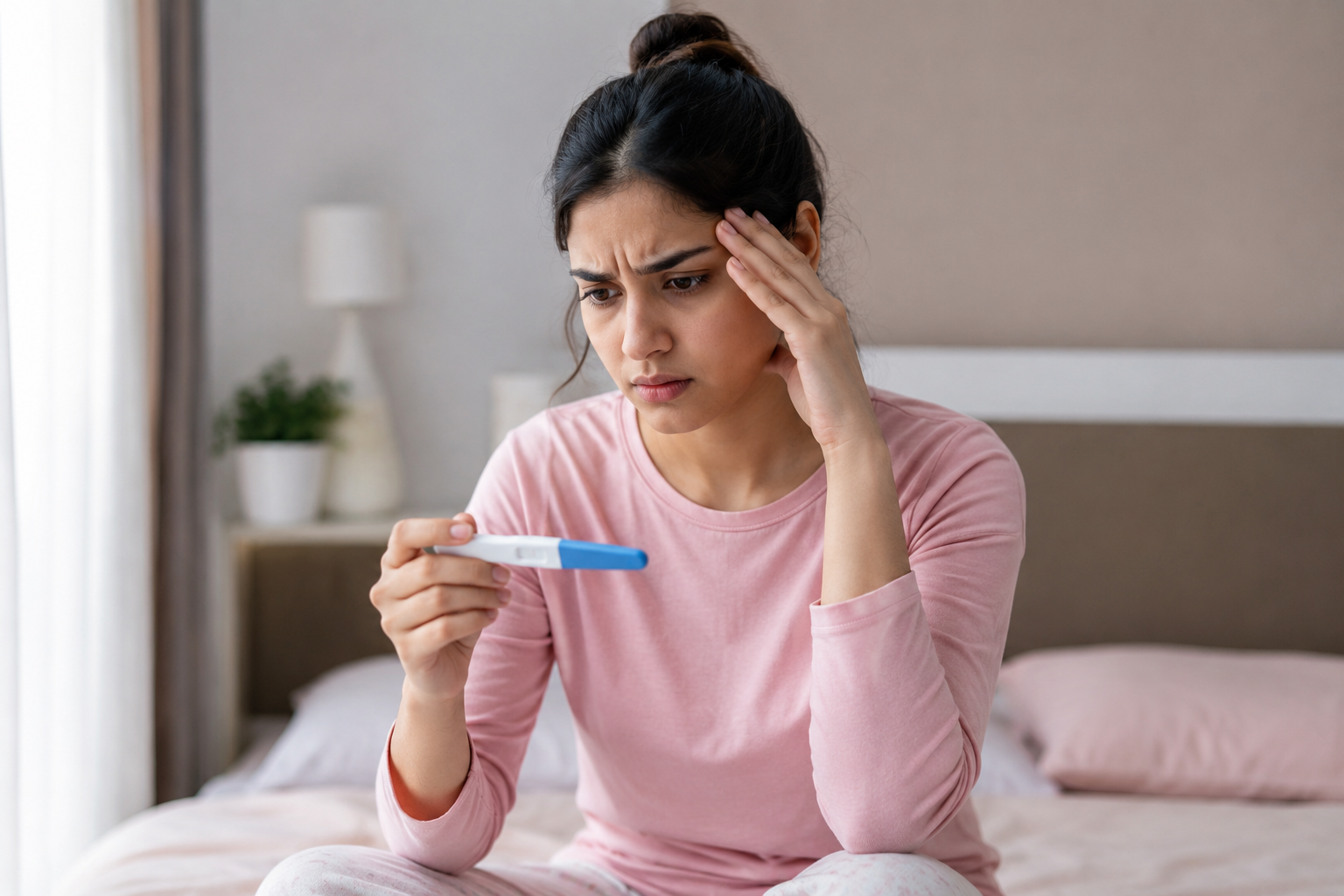
Missing a period can instantly trigger one thought, pregnancy. But what if your missed period arrives with none of the typical pregnancy symptoms? No nausea, no breast tenderness, no fatigue. It can leave many women confused and wondering what’s really happening.
The truth is, a delayed period doesn’t always mean pregnancy. Several factors can influence the menstrual cycle, and sometimes the body simply needs time to rebalance.
Can You Be Pregnant Without Pregnancy Symptoms?
Yes, it is possible to be pregnant without experiencing noticeable pregnancy symptoms, particularly during the early stages. Not everyone experiences nausea, breast tenderness, fatigue or other common symptoms at the same time, and some people may have very few symptoms.
A missed period can be an early sign of pregnancy, but it does not confirm pregnancy by itself. If pregnancy is possible, taking a home pregnancy test at the appropriate time can provide useful information. If the result is negative but your period still does not start, repeating the test or speaking with a gynaecologist may be appropriate, depending on your individual circumstances.
It is also important to remember that a late or missed period can happen for many reasons unrelated to pregnancy. Stress, hormonal changes, PCOS, thyroid problems, significant changes in weight, intense exercise and certain medicines can all affect the menstrual cycle.
Common Causes of a Missed Period Besides Pregnancy
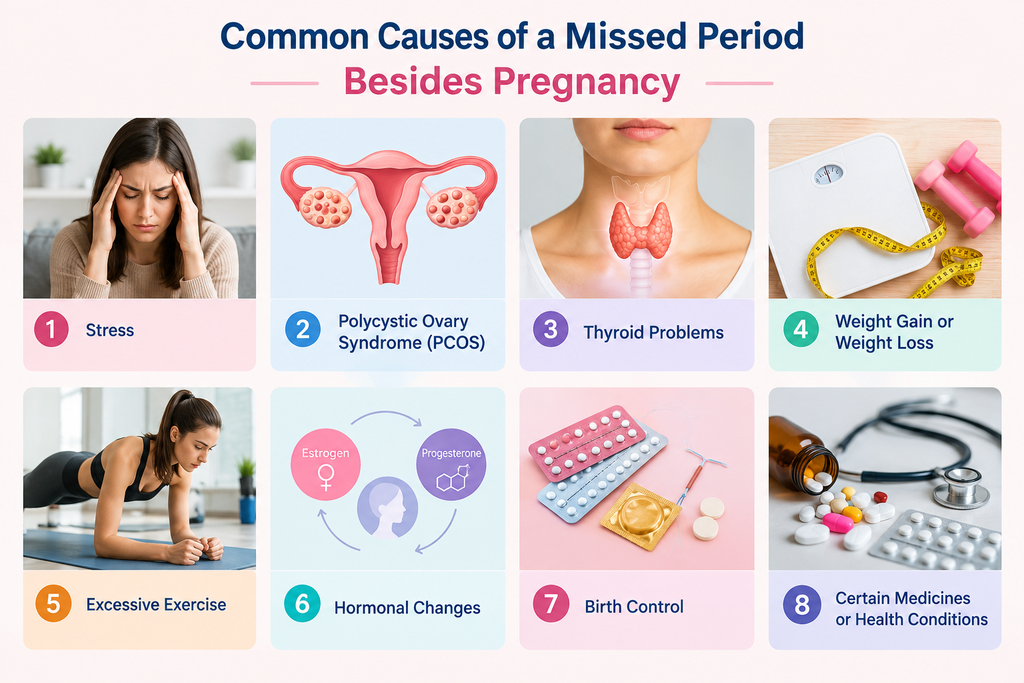
Pregnancy is one possible reason for a missed period, but it is not the only explanation. If you have missed your period and do not have pregnancy symptoms, several factors may be affecting your menstrual cycle.
1. Stress
Physical or emotional stress can affect the hormones involved in ovulation. When ovulation is delayed, your period may also arrive later than expected. Ongoing stress can sometimes lead to longer gaps between periods.
2. Polycystic Ovary Syndrome (PCOS)
PCOS is a common hormonal condition that can affect ovulation and cause irregular, delayed or missed periods. Some women with PCOS may also experience acne, increased facial or body hair, weight changes or difficulty with regular ovulation.
3. Thyroid Problems
Both an underactive thyroid and an overactive thyroid can affect menstrual regularity. Changes in thyroid hormone levels may be associated with delayed, irregular or absent periods.
4. Weight Gain or Weight Loss
Significant changes in body weight can influence hormone production and ovulation. Rapid weight loss, restrictive dieting or being underweight may affect periods, while excess weight can also contribute to hormonal and menstrual irregularities.
5. Excessive Exercise
Intense physical training or exercising without adequate nutrition and recovery can sometimes interfere with ovulation. This may result in periods becoming irregular or temporarily stopping.
6. Hormonal Changes
Hormonal fluctuations can occur at different stages of life. Menstrual cycles may be less predictable during the first few years after menstruation begins and during the transition towards menopause.
7. Birth Control
Hormonal contraceptives can change menstrual patterns. Some methods may make periods lighter or less frequent, while starting or stopping hormonal contraception may temporarily alter the timing of your cycle.
8. Certain Medicines or Health Conditions
Some medicines and underlying health conditions can affect menstrual cycles. If your periods have become irregular after starting a new medicine or alongside other health changes, discuss this with your healthcare professional.
A single late period does not necessarily indicate a serious health problem. However, repeated or persistent changes in your menstrual cycle deserve medical evaluation so that the underlying cause can be identified.
Stress Can Delay Your Cycle
Stress is one of the most common reasons behind a missed period. When the body is under emotional or physical pressure, it releases hormones that can disrupt the normal menstrual cycle.
A gynecologist once mentioned a patient named Sneha who skipped her period during a particularly stressful work month. She initially feared she might be pregnant, but tests showed otherwise. Once her routine stabilized and stress levels reduced, her cycle returned the following month.
The body often reacts to stress more strongly than we expect.
Sudden Weight Changes
Weight fluctuations, whether gain or loss can affect hormone production. If the body experiences rapid changes in body fat or nutrition, it may delay ovulation, leading to a delayed period.
This is common in women who start intense exercise routines or follow strict diets.
Hormonal Imbalance
Hormones control the entire menstrual cycle. Conditions like PCOS (Polycystic Ovary Syndrome) or thyroid imbalance can interfere with ovulation and cause irregular or missed cycles.
In such cases, periods may come late, become unpredictable, or skip entirely for a month.
Changes in Lifestyle or Routine
Travel, changes in sleep patterns, new work schedules, or even significant lifestyle shifts can affect your body’s internal clock. These changes may temporarily delay ovulation and result in a missed period.
Many women notice cycle irregularities when they switch jobs, move cities, or experience major life changes.
Birth Control or Medications
Certain contraceptives and medications can influence the menstrual cycle. Some birth control pills or hormonal treatments may cause lighter periods or occasional skipped cycles.
This type of delayed period is often temporary and related to hormonal adjustments.
What Tests May Be Recommended for a Missed Period?
The tests recommended for a missed period depend on your symptoms, menstrual history, age and the possibility of pregnancy. A gynaecologist may first ask about your usual cycle, recent stress, weight changes, medicines, contraception and other symptoms.
Depending on the situation, your doctor may recommend:
- A pregnancy test
- Blood tests to assess hormone or thyroid levels
- An ultrasound examination
- Other investigations based on your symptoms and medical history
The purpose of these tests is to understand why ovulation or menstruation may have been delayed or interrupted. Treatment, if needed, should be based on the underlying cause rather than simply trying to induce a period without knowing why it was missed.
Expert Care for Women’s Health
At Sunshine Women’s Hospital in Ahmedabad, we specialize in providing top-quality care for women’s pregnancy, infertility, and gynecological concerns across all age groups. Our team is led by some of the best gynecologists in Ahmedabad and supported by highly trained medical staff, and is dedicated to delivering the highest standard of healthcare with personalized attention.
Our hospital’s mission is to achieve excellence in every aspect of medical practice, ensuring patient satisfaction and continuously enhancing our approach to care. As one of the most trusted centers for women’s health, we focus on compassionate and comprehensive treatment for every woman who visits Sunshine Women’s Hospital.