
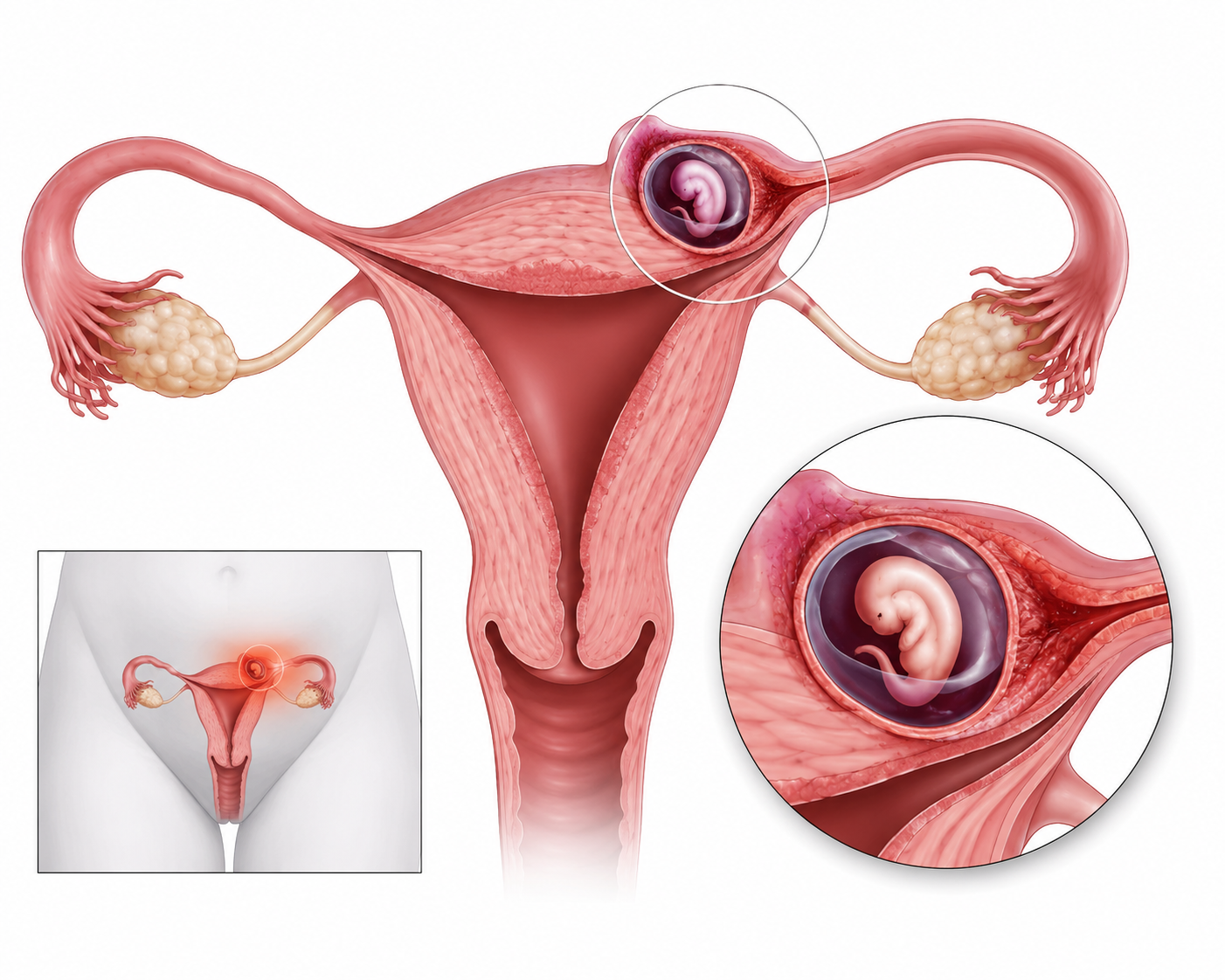
Pregnancy usually develops inside the uterus, where the embryo has space and support to grow. But in rare situations, implantation happens in an unusual location. One such condition is cornual pregnancy, a type of ectopic pregnancy that occurs in the corner of the uterus where the fallopian tube connects.
Although uncommon, this condition requires early diagnosis and medical care because it can lead to complications if left untreated.
What is Cornual Pregnancy?
A cornual pregnancy happens when the fertilized egg implants in the upper corner of the uterus, specifically in the interstitial part of the fallopian tube. Because this area has more space and blood supply than other parts of the tube, the pregnancy may grow longer before symptoms appear.
This is why early detection is extremely important.
Many women initially assume they are experiencing a normal pregnancy because the early signs may feel similar.
Symptoms of Cornual Pregnancy
In the beginning, symptoms may resemble those of a normal pregnancy. However, certain warning signs may appear as the pregnancy progresses.
Common ectopic pregnancy symptoms include:
- Mild to severe abdominal pain
- Vaginal spotting or bleeding
- Dizziness or weakness
- Pain on one side of the lower abdomen
- Shoulder pain in severe cases
A doctor once described a case where a patient came in with mild abdominal discomfort and light spotting. She assumed it was just normal early pregnancy changes. After an ultrasound examination, doctors identified it as a cornual pregnancy, and early treatment helped prevent serious complications.
Stories like these highlight why medical check-ups in early pregnancy are so important.
How Doctors Diagnose Cornual Pregnancy
Diagnosis usually involves a combination of medical history, blood tests, and imaging.
Doctors often rely on:
- Ultrasound scans to identify the location of the pregnancy
- Blood tests to monitor pregnancy hormone levels (hCG)
- Clinical evaluation of symptoms
Early ultrasound plays a key role in confirming whether the pregnancy is developing in the correct location.
Treatment Options
Treatment depends on how early the condition is detected and the overall health of the patient.
Possible treatment approaches include:
Medication:
In very early cases, medication may be used to stop the growth of pregnancy tissue.
Minimally Invasive Surgery:
If the pregnancy has progressed further, doctors may recommend laparoscopic surgery to remove the pregnancy safely while preserving the surrounding reproductive structures.
Emergency Treatment:
If the condition causes internal bleeding, immediate surgical care may be necessary.
The goal of treatment is always to protect the woman’s health while preserving future fertility whenever possible.
Compassionate Care for Women’s Health
At Sunshine Women’s Hospital in Ahmedabad, women receive specialized medical attention for pregnancy-related conditions, fertility care, and gynaecological health. Our experienced doctors and dedicated healthcare team focus on accurate diagnosis, advanced treatment options, and supportive care throughout every stage of a woman’s health journey.
From routine pregnancy monitoring to managing complex conditions like cornual pregnancy, we aim to provide safe, modern, and patient-centred care. With a strong commitment to medical excellence and compassionate service, Sunshine Women’s Hospital continues to support women with trusted healthcare solutions designed for their comfort and well-being.