
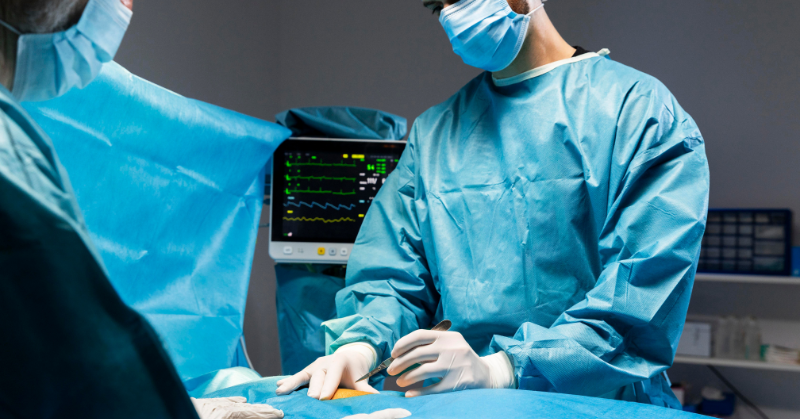
Women dealing with health problems now have better options than they did before. Advanced Laparoscopy is one such option. It helps doctors solve complex gynaecological problems without major incisions on your body. Issues such as fibroids, endometriosis, ovaries cysts, and even scar tissue in the pelvic area can now be treated in this manner. Doctors use special tools and cameras to perform the work. You feel less pain and recover quicker.
According to recent reports, laparoscopy has been the preferred surgery for most doctors operating on women.
If a doctor says you need surgery for a women’s health problem, you should know what advanced laparoscopy is and when doctors use it.
About Advanced Laparoscopy
Advanced laparoscopy is surgery performed through extremely small incisions in the body. These are not much more than 0.5 to 1.5 cm wide holes. These holes were put through with a small camera and special tools. This is unlike the old-style surgery, where the doctors make a single big cut. With small holes, your body recovers more quickly and has fewer post-operative issues.
The word “advanced” means the doctor has extra training and uses better equipment. They can handle tough cases like really bad endometriosis or lots of scar tissue. You end up with tiny scars instead of big ones. Most people go back to their normal lives quickly. The results are usually good.
Key Benefits of Advanced Laparoscopy
- You feel much less pain after surgery compared to big operations. You also bleed less during the procedure.
- You leave the hospital sooner and heal faster. Many people return to their normal routine in just a few days.
- Your scars are very small. This looks better, and you have a lower risk of infection.
- Doctors can view your stomach organs and pelvis on a monitor. This helps them determine what is wrong and the correct way to fix it.
Common Indications for Advanced Laparoscopy
When other treatments fail, doctors prefer to use advanced laparoscopy. The following are the primary issues that they address in this manner:
Fibroids and Uterine Myomectomy
Fibroids have the potential to cause a lot of bleeding during periods. They may also result in pain or difficulty in getting pregnant. Doctors take them out using small holes, keeping your uterus intact. You heal much faster this way.
Endometriosis and Adhesions
Other women experience pain, abnormal menstruation or are unable to conceive due to endometriosis. Laparoscopy is a procedure that allows doctors to cut or burn the bad tissue and scar tissue that results in these problems.
Removal of Ovarian Cysts and Tumours
Large ovarian cysts may be painful or lead to other conditions. Surgeons are able to remove cysts and benign tumours with small holes. They do not destroy healthy sections of your ovaries. You recover quickly.
Ectopic Pregnancy and Tubal Surgery
The development of a pregnancy in the wrong place (not in the uterus) is called ectopic. To correct this issue, doctors opt to use laparoscopy. It is effective and minimally invasive.
Pelvic Organ Prolapse and Hysterectomy
Sometimes doctors need to remove the uterus or fix organs that have dropped down. Advanced laparoscopy allows them to do this through small incisions. You have fewer problems after surgery when they do it this way.
What the Procedure Involves & What to Expect
Knowing what happens during surgery helps you worry less. Here’s how it works.
Pre-operative Preparation
Your doctor will talk to you about your health condition. They’ll look at your test results and scans. Together you’ll decide if laparoscopy is right option for you. You’ll need some basic tests. You can’t eat before surgery. You’ll sign papers saying you understand and agree to the surgery.
Surgical Procedure
You’ll be asleep during surgery because of total anesthesia. The doctor makes a small hole near your belly button. They pump in a gas called carbon dioxide. This allows visualization inside your belly. They put in a camera and other tools through tiny holes. The uterus and pelvic organs can be viewed through camera on Monitor. The operative procedure is done through guidance under vision.
Recovery and Aftercare
Small holes mean less pain. You leave the hospital faster. You heal more quickly than after big surgery. Most people can do light activities in 1 to 3 days. Full recovery takes 2 to 4 weeks. How long depends on how complicated your surgery was.
Risks and Considerations
No surgery is Risk free but this surgery is safer than traditional-style surgery. But there are still some risks. You might bleed or can get an infection. Sometimes, nearby organs are accidentally injured. Anesthesia has its own risks, too. A good doctor will explain all of this before you have surgery.
Choosing the Right Provider for Advanced Laparoscopy
When you pick a hospital or doctor for advanced laparoscopy, look for these things:
- A doctor who has special training in advanced laparoscopy for women’s health problems
- A hospital with the newest laparoscopic tools and good care after surgery
- Before surgery, the doctor is supposed to clarify everything to the patient. They are supposed to inform you of what you should anticipate when it comes to recovery, whether you are still able to have babies and what outcomes you are likely to achieve.
Conclusion
Advanced laparoscopy transforms tough surgeries for women into something not so difficult. You feel less pain. You heal faster. The results are better. This is not just about removing a cyst or a fibroid. It is all about remaining healthy & about living a better life.
Sunshine Women’s Hospital offers advanced laparoscopic Gynaecology care, utilising state-of-the-art technology, skilled specialists, and personalised treatment plans tailored to each patient’s condition and recovery objectives.